How Often Should I Change My Air Conditioning Filter in Hawaii?
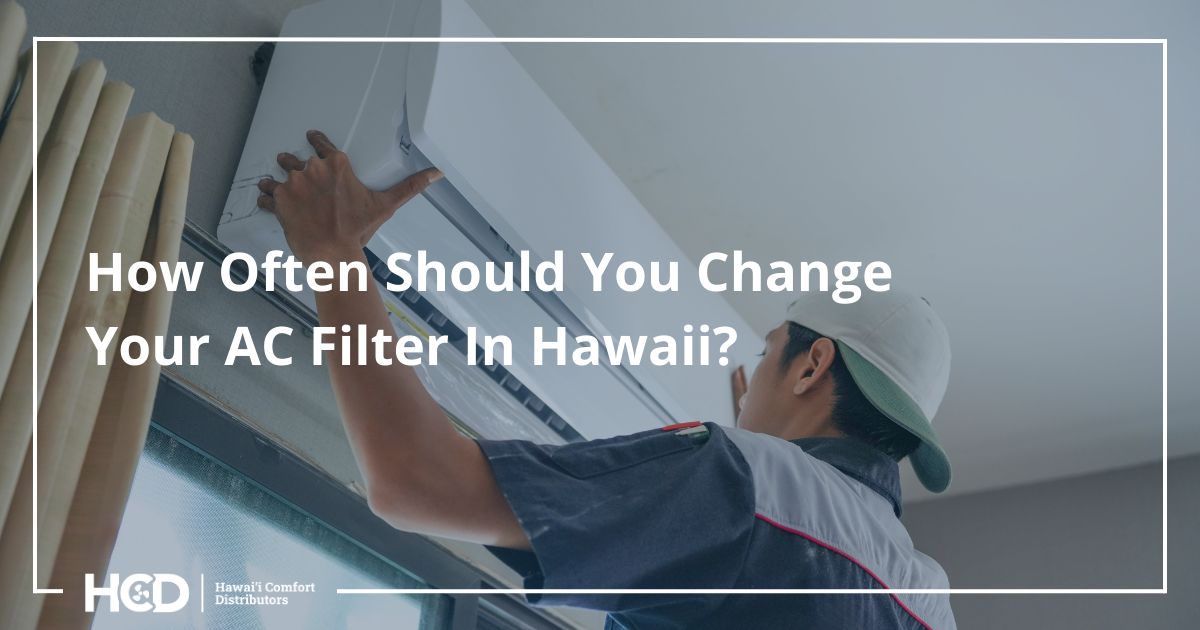
One of the most popular questions asked of HVAC technicians is how often a homeowner needs to replace their air conditioning filter.
For most households, the answer is approximately every 2 to 3 months; however, if you have pets, allergies, or if your AC is always on, you will need to replace it every 1-2 months.
Since air conditioning units are typically operated year-round in Hawaii, checking your filter monthly is a good habit to establish. It will assist in preventing airflow issues and ensure your unit runs efficiently.
Next, we'll discuss the various factors that determine how often a filter needs to be replaced.
How Often Will You Need To Replace Your HVAC Filter?
You won't find a single replacement timeline that applies to each household. Each household's unique situation, frequency of operation of the HVAC system and type of filter being used will ultimately dictate when to replace the filter.
Washable filters are available for mini-split systems. These filters need to be cleaned regularly rather than replaced. Disposable filters are commonly used in central or ducted systems and are replaced every few months.
Below are general replacement schedules for common scenarios that technicians typically encounter in homes.
| Home or Filter Situation | Recommended Frequency |
|---|---|
| Standard household | Every 2–3 months |
| Home with pets | Every 1–2 months |
| Allergy or asthma concerns | Every 1–2 months |
| Vacation home or light AC use | Every 3–6 months |
| Basic 1-inch fiberglass filter | About every 30 days |
| Pleated filter (1–2 inch) | Every 2–3 months |
| 4-inch media filter | Every 6–12 months |
| Mini split washable filters | Clean every 2–4 weeks |
Replacing an HVAC Filter Has Multiple Benefits
According to the United States Department of Energy, replacing a dirty HVAC filter can improve system efficiency by as much as 5% to 15%.
Your HVAC filter is intended to catch dust and debris from traveling through your air conditioning system and into your home. As air passes through the system, the filter traps particles like dust, lint, pet dander and other airborne pollutants.
This offers benefits in two major areas:
1. Maintaining Cleaner Air Inside Your Home
2. Protecting Important Parts of the AC System from Buildup
When the filter is clean, air can pass freely through the system. When the filter is clogged, airflow is restricted. That causes the system to work harder to cool your home.
Maintaining Clean Airflow Helps Maintain Consistent Cooling, Reduces Unnecessary Strain on Equipment
What Affects How Frequently You Must Replace Your HVAC Filter?
1. HVAC Usage
The main factor is simple: the more your air conditioner is turned on, the more air travels through the filter. Air conditioning systems that run constantly, typically require more frequent filter replacements.
In warmer states like Hawaii, where many homes utilize air conditioning year-round, filters may fill up more rapidly than in cooler climates.
2. Pets
Pet hair and dander accumulate on filters rapidly. Pet owners, therefore, tend to replace filters every 1-2 months to maintain adequate airflow.
3. Filter Type
Filters differ in terms of lifespan. Simple 1-inch filters generally require more frequent replacement, whereas thicker media filters can occasionally endure longer periods of time before requiring replacement.
Mini-split systems are distinct as well. Most mini-splits use washable filters that must be cleaned periodically as opposed to being replaced.
4. Dust Levels and Surroundings
Dust levels in a home, whether due to open windows, surrounding construction or proximity to highways, etc., may result in filters becoming clogged faster than usual.
In Hawaii, environmental factors such as vog (volcanic smog), which includes both fine particles and gases, can also accelerate the rate of filter buildup that requires more regular checks.
Vog consists of fine particles and gases, therefore, although standard HVAC filters can capture particulate matter, additional filtration, such as activated carbon layers, is sometimes employed in air cleaners to help eliminate gas-related pollutants.
5. Allergies or Air Quality Concerns
If there are allergy sufferers or individuals with asthma in the home, more frequent filter replacements may assist in minimizing airborne particles circulating through the house.
Additional Environmental Factors
Several other elements can impact how quickly a filter accumulates dirt, including humidity, the size of the home and the number of occupants in the household. These elements may result in increased airborne particle circulation through the system.
Environmental Factors in Hawaii That May Affect Your Filter
As a resident of Hawaii, you are likely familiar with a variety of environmental elements that residents of other locations may not face.
Salt Air in Coastal Areas
Residents of coastal communities such as Ewa Beach, Kailua, or Kihei are exposed to salt that can travel long distances on winds and eventually settle on the surfaces of the filters in these homes.
Salt and moisture can combine over time to produce deposits on the filter surfaces. Salt-air exposure may accelerate the accumulation of buildup on filters in coastal communities and make it necessary to inspect filters more frequently.
Volcanic Smog/Vog and Volcanic Particles
Residents of the Big Island, or residents who are exposed to vog caused by particular wind directions across the islands, can experience poor air quality due to the presence of volcanic smog (vog).
Vog comprises tiny particles and gases, primarily sulfur dioxide. Although HVAC filters can capture some of the particulate matter, they cannot eliminate gases. There are instances in which air cleaners with activated carbon filters are utilized to minimize odors and gas-related pollutants.
Fine Dust/Red Dirt
Communities located in areas of red volcanic soil, such as Upcountry Maui, or sections of Central Oahu are known for their fine red volcanic soil. These types of particles are extremely fine and can easily enter homes.
When filters collect a lot of this type of dust, they may become clogged more quickly. Regular inspection of the filter helps to ensure the system maintains adequate airflow.
What Happens If I Do Not Replace My HVAC Filter?
A dirty HVAC filter can negatively impact both the performance of your HVAC system and the cleanliness of the air inside your home. In time, limited airflow will force the system to function at greater capacity and may bring about a multitude of unwanted issues.
Increased Energy Consumption
As a filter becomes clogged, the system must generate more power to push air through it, resulting in increased energy consumption.
Decreased Airflow
Restricted airflow can limit the volume of air that can flow from your vents and rooms that may take longer to cool.
Excessive Wear on System Components
Airflow restrictions can put excessive strain on components such as the blower motor. The repeated stress on the motor may shorten its life expectancy and may necessitate earlier repair or replacement.
Poorer Indoor Air Quality
A clogged filter may allow more airborne contaminants such as dust, allergens and particles to circulate throughout your home.
Possible System Problems
In extreme cases, restricted airflow may contribute to difficulties with your system such as frozen evaporator coils or over-heating components, potentially leading to service visits or maintenance.
Selecting the Appropriate HVAC Filter
All HVAC filters do not perform similarly. While some are primarily intended to protect the HVAC equipment, others provide superior indoor air quality.
Basic Fiberglass Filters
Basic fiberglass filters are among the least expensive and most straightforward of all filters. Fiberglass filters permit air to flow through your system very readily, which assists in preserving acceptable airflow.
Due to the minimal resistance created by fiberglass filters, this type of filter is similar to the airflow conditions that many HVAC systems were originally designed to operate within.
However, since fiberglass filters trap fewer small particles, they are not designed to offer substantial improvements in indoor air quality.
Pleated Filters
Pleated filters are the most commonly used in residential HVAC systems. They are capable of trapping more particles than basic fiberglass filters. Their folded structure provides a larger surface area, which enables them to trap particles like dust, pollen and pet dander while maintaining acceptable airflow.
Understanding MERV Ratings
HVAC filters are evaluated by a rating known as a MERV (Minimum Efficiency Reporting Value). This rating evaluates the effectiveness of the filter in capturing airborne particles.
Higher MERV ratings capture smaller particles; however, they can also increase the resistance to airflow. Restrictive airflow may adversely impact the operation of the HVAC system.
Every HVAC system was constructed to function uniquely; hence, the optimal MERV rating will vary between systems. Variables such as blower, ductwork and filter size will all affect how much filtration a system can tolerate while maintaining suitable airflow.
Therefore, selecting a filter that strikes a balance between filtration and airflow for your unique system is generally advisable.
Why Filter Depth Is Crucial
Filter depth also contributes to the ability of the filter to process airflow. Thinner filters, such as 1-inch filters, have less surface area, which allows the filter to be obstructive to airflow as soon as the filter accumulates debris.
Deeper filters, such as 2-inch or 4-inch media filters, have more surface area and may be able to continue to facilitate airflow while still filtering finer particles.
For that reason, some systems employ thicker filters to enhance both the filtration and airflow characteristics of the system.
HEPA Filters: What Are They?
HEPA filters are designed to capture extremely fine particles and are commonly found in hospitals, clinics, and air cleaners.
Generally speaking, however, HEPA filters are too restrictive for most residential HVAC systems except those specifically designed to accommodate them.
Most households aim to find a balance between sufficient filtration and adequate airflow to allow the system to operate efficiently.
Conclusion
Replacing your AC filter on a regular basis is among the easiest things you can do to help keep your air conditioning unit running properly. While in many cases changing your filter every 60-90 days will work for most homeowners, this time frame can vary depending upon the way you use your equipment, pet(s), local conditions, etc.
In Hawaii, due to the fact that most air conditioning units are operating year-round and exposed to various contaminants like salt air, vog, and fine dust; we recommend to check your filter at least once a month to assure the equipment continues to run with maximum efficiency.