AC Not Cooling? Why the Air Feels Cold but the Room Stays Warm
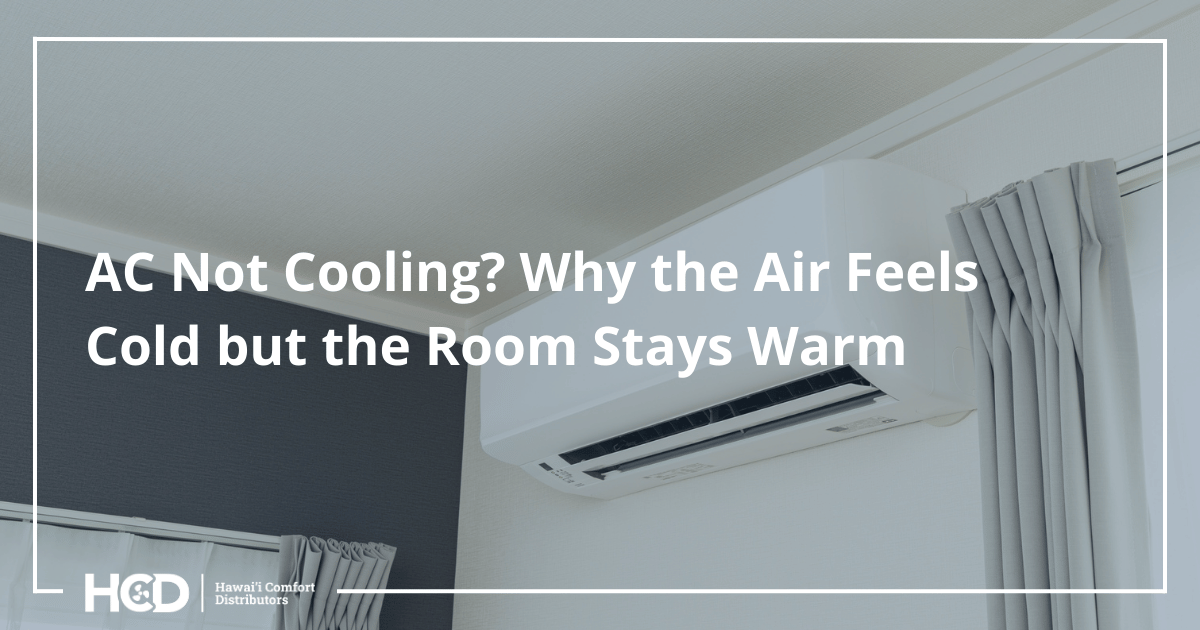
If you have ever stood near your air conditioner and felt cold air blowing, only to realize the room itself still feels warm, you are not alone. This is a common situation and it does not always mean something is broken.
In many cases, the system is producing cold air, but something is preventing that cooling from actually lowering the temperature of the space. Understanding why this happens can help you determine whether the issue is a simple adjustment, a maintenance concern, or something that needs professional attention.
Cold Air Does Not Always Mean the Room Is Cooling
Feeling cold air at the unit can be misleading. Air conditioners cool a space by removing heat from the room over time, not just by blowing cold air into it.
If heat is entering the room as fast as the system can remove it, the temperature may not change much, even though the air coming from the system feels cold. This is why an AC can seem like it is running constantly without delivering the comfort you expect.
7 Common Reasons Your AC Is Not Cooling the Room
1. Airflow Is Not Reaching the Space Properly
Cooling depends on airflow reaching the entire room, not just the area near the unit.
When air stays trapped near the source, the rest of the space never cools evenly. This is especially noticeable with wall mounted systems, such as mini splits, but it can happen with any setup. Fan speeds that are too low, airflow blocked by furniture, or units installed high in rooms with tall ceilings can all prevent air from circulating properly.
2. Clogged Filters
This is one of the most common and easiest issues to overlook.
Dirty or clogged filters reduce airflow through the system, which limits how much heat can be removed from the air. Even though the system continues to run and may still blow cold air, overall cooling performance drops.
A simple filter cleaning or replacement can make a noticeable difference.
3. Frozen Evaporator Coils
When airflow is restricted or refrigerant levels are low, the evaporator coil can freeze.
Once ice forms, cooling output drops quickly. Air coming from the unit may feel cool or slightly cold, but it is weak and ineffective. In some cases, airflow may slow down even more as ice builds up.
A frozen coil is a clear sign the system needs attention.
4. Low Refrigerant
Refrigerant is what allows an air conditioner to pull heat out of the air.
When refrigerant levels drop, often due to a leak, the system can no longer remove heat efficiently. The unit may still operate and produce cool air, but not enough to lower the room temperature.
This is not something that can be solved with a simple adjustment and should be handled by a professional.
5. Dirty Outdoor Coils
Cooling does not just happen indoors. The outdoor unit is responsible for releasing heat pulled from inside your home. When condenser coils are dirty or clogged with debris, that heat has nowhere to go. The system works harder, runs longer, and still struggles to cool the space.
6. The System Is Running but Not Keeping Up With Demand
Sun exposure, large windows, cooking heat, electronics, and even the number of people in the room can add heat faster than the system can remove it.
In some homes, single wall construction and poorly sealed windows allow cooled air to escape as quickly as it is produced.
7. High Humidity
Even when air temperature drops, excess moisture can leave the space feeling sticky or uncomfortable. Air conditioners remove humidity as part of the cooling process, but when moisture levels remain high, the system has to work harder to manage both tasks at once.
What You Can Check Before Calling for Service
Before assuming there is a major problem, a few quick checks can help.
Look for blocked airflow from furniture or curtains. Make sure fan settings match the size of the space. Keep doors and windows closed while the system is running. Clean filters regularly and keep the outdoor unit free of debris.
If the system continues to run without improving comfort, the issue may be related to airflow, humidity, home design, or system capacity rather than a mechanical failure.
When It Makes Sense to Have a Professional Look at the System
If adjustments do not improve comfort, a professional evaluation can help identify the root cause.
A technician can assess airflow, refrigerant levels, duct performance, system sizing, and overall operation. In many cases, improving comfort does not require replacing the system. Targeted repairs or adjustments can make a noticeable difference.
Conclusion
When an air conditioner feels cold but does not cool the room, the problem is rarely just one thing. It is usually a combination of airflow, heat load, humidity, and how well the space holds conditioned air.
Understanding these factors helps set realistic expectations and leads to better long term comfort. With proper maintenance and the right setup, most air conditioning systems can deliver reliable cooling and consistent comfort.